


Table of Contents
- The Real Price of Looking Like the Future
- What Defines Futuristic Fashion in 2026
- Smart Textiles in Clothing: Function vs. Gimmick
- Industrial Fashion: The Blueprint for Modern Streetwear
- Cost-Per-Wear: Is the Investment Justified?
- How to Style Futuristic Outfits for Daily Wear
- Caring for Tech-Integrated Fabrics
- The Verdict: Where Futuristic Fashion Fits
- Frequently Asked Questions
Last Updated: September 6, 2026
The question "is futuristic fashion worth it" usually gets answered with glossy runway photos and breathless trend reports. That misses the point entirely. The real question is whether a jacket with integrated heating coils or a shirt made from recycled ocean plastic survives the washing machine, fits your actual life, and justifies its price tag. Planet iZM curates sci-fi-inspired streetwear, focusing on the difference between a garment that is genuinely innovative and one that simply looks the part.
Futuristic fashion is the design movement that applies advanced material science, smart textiles, and forward-looking aesthetics to clothing and accessories. The honest answer to whether it is worth your money is: it depends entirely on what you buy and how you wear it. The market is split between high-concept pieces that belong on a runway and utility-driven garments designed for daily life. Below, we will show you exactly how to tell the difference, what to pay for, and how to make sure your investment does not fall apart after a few washes.
The Real Price of Looking Like the Future
The most common mistake is assuming futuristic fashion is a single category with a single price point. It is not. You are either paying for a costume or paying for engineering. A cheap novelty tee with a neon print might cost $20 and disintegrate in three months. A well-constructed piece with functional details, durable synthetic fibers, and proper seams costs more upfront but changes your cost-per-wear math entirely.
To make that math concrete, you have to break the market down by what you are actually buying. The table below shows the realistic price bands you will encounter in the U.S. market, from fast-fashion knockoffs to genuine technical apparel.
| Category | Typical Price Range | What You Are Paying For | Realistic Lifespan |
|---|---|---|---|
| Fast-fashion costume | $15 - $40 | A visual gimmick: neon prints, cheap reflective panels, plastic zippers | 5 - 10 washes before fading or seam failure |
| Mid-tier streetwear | $50 - $120 | Better cotton or poly blends, reinforced stitching, screen-printed graphics that resist cracking | 1 - 3 years with normal rotation |
| Technical apparel (e.g., Arc'teryx, Nike ACG) | $150 - $400 | Engineered fabrics (Gore-Tex, Pertex), taped seams, YKK AquaGuard zippers, DWR finishes | 5+ years if cared for properly |
| Luxury/Designer (e.g., Rick Owens, Acronym) | $500+ | Premium materials, avant-garde design, brand cachet | Indefinite if you do not resell it |
That premium pays for real things: reinforced stitching at stress points, high-quality screen printing that resists cracking, and fabrics that hold their shape through repeated wear. What most guides miss is that the "futuristic" element in quality streetwear is often about construction technique, not just visual design. The difference between a $60 tee and a $20 tee is usually not the logo, it is the garment production quality that determines whether you are replacing it in a season or still wearing it in three years.
Here is the trade-off most trend reports ignore: the mid-tier and technical categories are where the "worth it" argument actually lives. A $20 costume piece is not worth it because it fails quickly. A $400 technical jacket is worth it only if you need its specific performance features, thermal regulation, waterproofing, or extreme durability, in your daily life. If you just want the look, that $400 jacket is overkill. The sweet spot for many consumers is where you get the aesthetic and enough construction quality to survive a real washing machine.
What Defines Futuristic Fashion in 2026
Futuristic fashion in 2026 is defined by three converging forces: aesthetic influence from science fiction, integration of functional technology, and a shift toward sustainable innovation. The cyberpunk aesthetic that dominated early iterations has matured. What remains is a design language built on geometric cuts, technical materials, and a color palette that leans on metallics, neons, and stark monochromes.
The sci-fi influence now shows up in subtler ways. Think modular clothing with adjustable components, ergonomic seam placement, and fabric with thermal regulation properties, not just silver jumpsuits. The most wearable pieces borrow the utility-driven ethos of industrial fashion, which prioritizes function and durability as the foundation of style. This is the blueprint for modern streetwear, and it is why futuristic pieces no longer look out of place at a coffee shop or a casual office.
Beyond the Cyberpunk Aesthetic: Utility-Driven Design
The cyberpunk aesthetic is the entry point, but it is not the destination. The staying power of futuristic fashion depends on utility-driven design, which asks a simple question: does this garment do something better than a standard one? A jacket with multiple sealed pockets for tech carries more value than one with a cool print. A shirt with anti-odor fabric treatment outperforms a standard cotton tee on a long day.
When you evaluate a piece, look for specific features rather than vague vibes. Does the material have a measurable benefit like moisture wicking or UV protection? Are the closures and zippers heavy-duty? Does the fit accommodate movement without restriction? A garment that answers yes to these questions earns its place in your wardrobe. One that only offers an aesthetic will date quickly.
Smart Textiles in Clothing: Function vs. Gimmick
Smart textiles in clothing range from genuinely useful innovations to expensive novelties. The useful end includes fabrics with temperature regulation, biometric integration capabilities, and durable water repellency. The gimmick end includes garments with LED integration that require battery packs and careful hand washing, which most owners abandon after the novelty fades.
The deciding factor is maintenance. A textile that requires special care is a commitment, not a convenience. Before you invest in a piece with embedded electronics or advanced coatings, ask yourself if you are prepared for the upkeep. The most practical smart textiles are those that work passively, like phase-change materials that adapt to your body temperature, rather than actively powered components that can fail (peer-reviewed research).
Industrial Fashion: The Blueprint for Modern Streetwear
Industrial fashion has become the backbone of the futuristic streetwear movement because it prioritizes durability and function over fleeting trends. This approach draws from workwear and technical apparel, using high-tenacity fibers, reinforced panels, and utilitarian silhouettes. The result is clothing that looks forward-thinking because it is built to perform, not just to be photographed.
This is where the value proposition of futuristic fashion becomes clear. A piece designed with an industrial mindset offers a tangible benefit: longevity. The Council of Fashion Designers of America's sustainability resources notes that extending the life of a garment by just nine months reduces its carbon, waste, and water footprints by roughly 20 to 30 percent. Choosing a durable, well-made futuristic piece over a fast-fashion alternative is a sustainability decision as much as a style one.
Cost-Per-Wear: Is the Investment Justified?
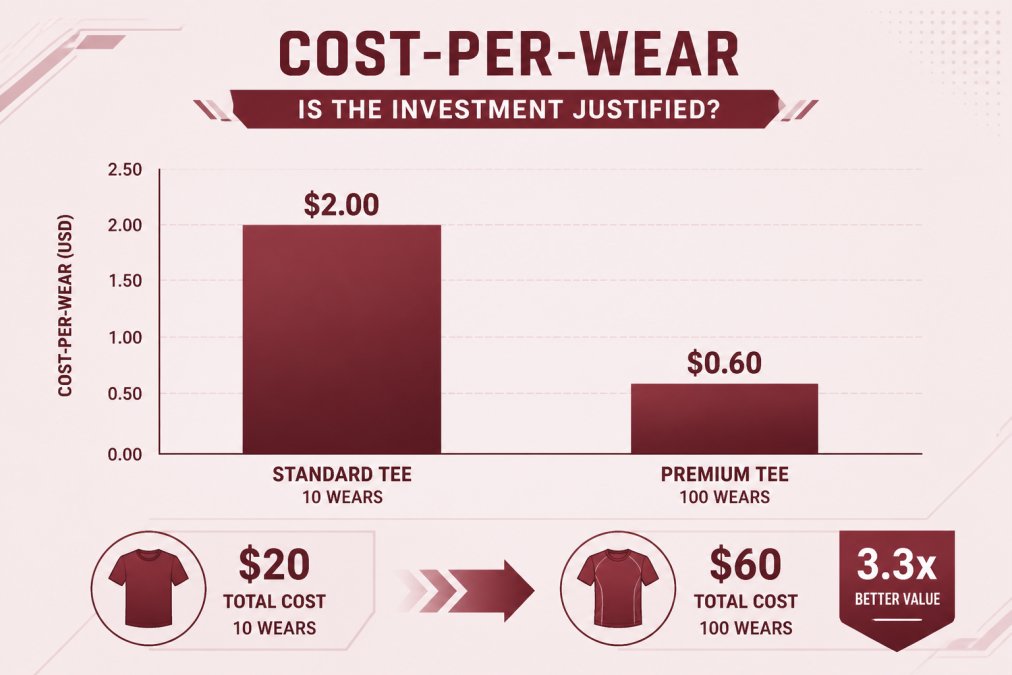
The most reliable way to determine if futuristic fashion is worth it is to calculate cost-per-wear, which is the price of the item divided by the number of times you wear it. A $60 garment worn 60 times costs $1 per wear. A $20 garment worn five times before it falls apart costs $4 per wear. The math favors quality, but only if you actually wear the item.
| Purchase Price | Estimated Wears | Cost Per Wear |
|---|---|---|
| $20 standard tee | 10 | $2.00 |
| $60 premium futuristic tee | 100 | $0.60 |
| $120 tech jacket | 150 | $0.80 |
The catch is that cost-per-wear only works if the piece integrates with your existing wardrobe. A statement piece you wear twice a year is a poor investment regardless of its build quality. This is why versatility matters more than novelty. Pieces with a neutral color palette and a form-fitting but comfortable silhouette will see more rotation than avant-garde items that are difficult to pair.
How to Style Futuristic Outfits for Daily Wear
Styling futuristic outfits for daily wear requires restraint. The goal is to look intentional, not costumed. Start with one futuristic element and build the rest of the outfit around neutral, familiar basics. A graphic tee with a retro-futuristic metropolis print pairs easily with standard denim and sneakers. The aesthetic versatility comes from letting the statement piece do the work without overwhelming the rest of the look.

For a more advanced approach, mix textures and materials. Combine a technical fabric jacket with a soft cotton base layer. Pair high-tech footwear with classic trousers. The contrast between the futuristic element and the familiar ground keeps the outfit wearable. Avoid layering multiple loud futuristic pieces at once, which tips the look from intentional into cosplay.
STAY LOCKED IN WITH PLANET iZM →
Start with a Statement Piece
The easiest entry point is a single statement piece, like a well-designed graphic tee. The Neon Cityscape Graphic Tee from Planet iZM is a practical example. It is a lightweight, 100% cotton tee featuring a detailed, retro-futuristic metropolis illustration, and it fits the criteria for a smart first purchase: it is machine washable, visually distinct, and easy to style with everyday items.
A piece like this anchors an outfit without requiring you to overhaul your wardrobe. Wear it under a plain jacket for a subtle nod to the aesthetic, or on its own as the centerpiece. It offers the visual impact of the trend with the durability and care requirements of a standard premium tee, which makes it a low-risk introduction to the style.
Caring for Tech-Integrated Fabrics
The longevity of futuristic fashion depends on how you care for it. Standard synthetic fibers and cotton blends are forgiving, but tech-integrated fabrics with special coatings or embedded components require specific handling. The first rule is to read the care label before you wash. The second is to default to cold water and air drying, which preserves fabric treatments and prevents shrinkage.
But "read the label" is not enough. Different technologies fail in different ways. Here is a practical breakdown of how to handle the most common tech-integrated materials you will actually find in U.S. retail.
DWR (Durable Water Repellent) Finishes Found on many technical jackets and pants. The finish causes water to bead up and roll off. The problem: standard detergents strip this finish over time. After repeated hot washes with regular detergent, a DWR finish is often gone. To preserve it, wash infrequently, use a technical-specific cleaner like Nikwax Tech Wash, and re-apply a DWR spray (like Revivex) once a year. Air drying is mandatory, the heat of a dryer accelerates the breakdown of the chemical bond.
Phase-Change Materials (PCMs) Used in some temperature-regulating base layers (e.g., Outlast). These materials absorb, store, and release heat to buffer your body temperature. They are embedded in the fibers and are relatively robust. The main threat is fabric softener, which coats the fibers and blocks the PCM from functioning. Wash with mild detergent, skip the softener entirely, and tumble dry on low if needed. High heat can degrade the microcapsules that hold the PCM.
Embedded Electronics (LEDs, Sensors, Heating Coils) This is the hardest category. Garments with integrated wiring or batteries require extreme care. Most manufacturers specify hand washing in cold water or spot cleaning only. Never submerge a garment with a non-removable battery. If the battery is removable, take it out before any cleaning. For heating elements, like a heated jacket, the coils are typically sandwiched between layers; aggressive washing can break the connections. The general rule: if it has a battery, do not put it in a washing machine.
Anti-Odor and Antimicrobial Treatments Often found in performance tees and futuristic streetwear. These treatments (often silver-based or zinc-based) are bonded to the fibers. They are fairly durable but can be neutralized by chlorine bleach and fabric softeners. Wash in cold water with a mild detergent. If you notice the anti-odor effect fading, it is likely the treatment has worn off, this is a normal degradation, not a defect.
Compression and High-Stretch Synthetics Many futuristic silhouettes rely on high-stretch nylon or spandex blends. These fabrics are sensitive to heat. Hot water and high-heat drying break down the elastane, causing the garment to lose its shape and "bag out." Always wash in cold water and hang to dry. This is the single most common cause of premature failure in modern technical apparel.
A common mistake is treating all futuristic clothing like standard cotton. Garments with water-repellent finishes lose their effectiveness after repeated hot washes. Pieces with compression or thermal properties can degrade with fabric softener. For most items, a gentle cycle with mild detergent and line drying will extend the life of the technical features significantly. When in doubt, hand washing is the safest option for preserving both the material science and the aesthetic.
The Verdict: Where Futuristic Fashion Fits
Futuristic fashion is worth the investment when you prioritize construction quality, functional design, and versatility over pure novelty. The pieces that deliver value are those built on the principles of industrial fashion: durable materials, thoughtful construction, and a design that references the future without sacrificing everyday wearability. The MIT Media Lab's research on wearable technology continues to push what is possible with smart textiles, but the consumer market rewards garments that balance innovation with practicality.
The ethical considerations also matter. Mass-produced trends often rely on synthetic fibers derived from fossil fuels, which is why seeking out brands that emphasize durability and circular economy principles is a more responsible choice. A smaller wardrobe of high-quality, long-lasting futuristic pieces beats a larger collection of disposable trend items.
For most people, the smartest approach is to start with one or two well-chosen pieces that you can wear regularly. This allows you to adopt the aesthetic without committing to a full wardrobe overhaul. The pieces that survive in your rotation are the ones that feel good, hold up in the wash, and make you look forward to putting them on.
The challenge with futuristic fashion is cutting through the hype to find garments that deliver on their promise. Planet iZM curates a collection focused on this exact problem, offering sci-fi-themed streetwear built for real life, not just the runway. Our pieces combine premium construction with distinctive design, and our integrated lifestyle approach extends to wellness products that support the same forward-thinking ethos. STAY LOCKED IN WITH PLANET iZM and build a wardrobe that looks like the future and lasts like the past.
Frequently Asked Questions
Is futuristic fashion practical for everyday wear?
Yes, when you choose the right pieces. Focus on designs that use durable materials and a form-fitting cut rather than experimental runway concepts. A graphic cityscape tee or tech-wear jacket with ergonomic pockets offers the aesthetic without sacrificing comfort. The key is to look for high-quality construction and versatile colors that blend with your current wardrobe.
How do smart textiles impact the value of futuristic clothing?
Smart textiles add tangible value only when the function is useful. Features like thermal regulation or LED integration can justify a higher price if you actually use them. However, if a garment's tech component is fragile or hard to maintain, it lowers the cost-per-wear. For most buyers, the best value comes from clothing that uses high-tech fabrics for durability and fit, not just novelty.
What are the key elements of cyberpunk and sci-fi inspired streetwear?
The core elements include a cyberpunk aesthetic with dark, neutral bases, modular clothing like straps and buckles, and utility-driven pockets. Avant-garde silhouettes and subtle sci-fi influence, such as a futuristic metropolis print, add character without being costume-like. The goal is to capture a dystopian fashion edge while keeping the garment wearable and versatile for a modern wardrobe.
Are futuristic fashion pieces considered sustainable investments?
They are when you prioritize durability over trends. A well-made piece from recycled materials or high-quality synthetic fibers lasts longer and keeps its visual appeal, reducing the need for fast fashion replacements. This aligns with a circular economy approach. Look for brands that emphasize garment production quality, ensuring your purchase has a longer lifespan and a better cost-per-wear.