


Table of Contents
- What Defines Futuristic Clothing for Urban Dwellers
- The Core Elements: Cyberpunk, Techwear, and Dystopian Design
- High-Tech Fabrics and Weather-Resistant Materials
- Techwear Essentials for Beginners
- How to Style Futuristic Streetwear for Daily Urban Life
- Industrial Fashion Aesthetic and Functional Urban Utility
- Sustainability and Budget-Friendly Approaches to Tech-Fashion
- Frequently Asked Questions
Last Updated: September 3, 2026
What Defines Futuristic Clothing for Urban Dwellers
Futuristic clothing for urban dwellers blends sci-fi aesthetics with functional, weather-resistant design for city living. The movement has evolved far beyond costume territory into legitimate streetwear that performs as well as it looks.
The core appeal lies in how these pieces solve real urban problems. Reflective fabrics catch light during evening commutes. Modular storage systems let you carry essentials without bulky bags. Weather-resistant materials handle unpredictable conditions. These aren't gimmicks; they're practical solutions wrapped in next-level design.
What separates futuristic clothing from other fashion movements is its obsession with visibility and utility. Urban dwellers face constant environmental challenges, harsh sunlight, sudden rain, crowded transit, variable temperatures. Futuristic design addresses these through technological fabrics, geometric cuts that improve movement, and strategic placement of reflective elements. This is fashion built for the city itself, not just worn in it.
The aesthetic draws from cyberpunk, techwear, and industrial design traditions. Think towering neon cityscapes, dystopian narratives, and the raw functionality of tactical gear. But here's what most guides miss: authentic futuristic clothing isn't about looking like you stepped out of a sci-fi film. It's about wearing pieces that feel like they belong in 2026 and beyond, pieces that acknowledge technology's role in how we move through urban spaces.
The Core Elements: Cyberpunk, Techwear, and Dystopian Design
Understanding the foundation of futuristic clothing for urban dwellers requires breaking down three interconnected aesthetics that define the movement.
Cyberpunk emerged from 1980s science fiction and emphasizes neon colors, bold graphics, and anti-establishment attitude. In modern streetwear, cyberpunk manifests as graphic tees featuring retro-futuristic cityscapes, like Planet iZM's Neon Cityscape Graphic Tee, which brings that glow-soaked metropolis aesthetic to everyday rotation. The appeal is immediate: you're wearing a visual statement about technology and urban life.

Techwear essentials for beginners focus on functional garments with technical fabrics and minimalist silhouettes. This is where futuristic clothing becomes practical. Weather-resistant jackets, modular cargo pieces, and synthetic materials dominate. The philosophy: every element serves a purpose. No decorative flourishes, only strategic design that improves how you move through the city.
Dystopian design leans into post-apocalyptic aesthetics: oversized silhouettes, dark color palettes, asymmetrical cuts, and industrial textures. It's the visual language of a world where civilization has shifted. Urban dwellers drawn to this aesthetic appreciate the rawness and authenticity. It rejects polished perfection in favor of something grittier and more honest.
Holographic and Reflective Trends
Holographic and reflective materials represent the most visible evolution in futuristic clothing for urban dwellers. These aren't novelty elements, they serve critical safety functions while delivering the aesthetic impact that defines the movement.
Reflective fabrics catch light and bounce it back toward the source, making you visible during low-light conditions. This matters for urban commuters navigating evening transit or early morning routines. Beyond safety, reflective materials create an iridescent quality that shifts with movement and lighting. The effect is inherently futuristic: you're wearing something that interacts with its environment in real time.
Holographic finishes go further. They fragment light into rainbow spectrums, creating a shimmering, otherworldly quality. Holographic accents appear on jackets, pants, and accessories. The trend accelerated because it solves a design problem: how do you make something look technological without relying on actual electronics?
The practical angle matters here. Many reflective and holographic fabrics are also durable and weather-resistant. They're not just aesthetic choices, they're functional upgrades that happen to look extraordinary. When you wear a piece with reflective paneling, you're getting visibility, durability, and that unmistakable futuristic vibe simultaneously.
Geometric and Avant-Garde Silhouettes
Geometric cuts and avant-garde silhouettes define how futuristic clothing for urban dwellers actually moves on your body. This isn't about traditional tailoring.
Oversized silhouettes dominate the movement. Jackets hang loose, pants feature exaggerated proportions, and layering creates dimensional shapes. This approach serves multiple purposes: it accommodates technical layers underneath, provides freedom of movement for urban navigation, and creates the visual impression of someone dressed for an environment beyond conventional city life.
Asymmetrical cuts break symmetry intentionally. One sleeve might be longer. Pockets might sit at unexpected angles. Zippers could run diagonally. These choices reject conventional fashion rules in favor of something that feels deliberately unconventional, almost architectural.
Modular design elements are crucial. Detachable panels, adjustable straps, and reconfigurable pockets mean you can adapt pieces to different situations. This reflects how urban dwellers actually live: flexibility matters more than rigid perfection. A jacket that transforms based on your needs is more valuable than one locked into a single configuration.
High-Tech Fabrics and Weather-Resistant Materials
The fabrics behind futuristic clothing for urban dwellers are where science meets style. Understanding material technology helps you make informed choices about durability and performance.
Modern technical fabrics use synthetic materials designed for specific functions. Nylon, polyester, and innovative blends dominate because they offer water resistance, breathability, and durability that natural fibers struggle to match. These materials can be treated with coatings that repel water while allowing moisture vapor to escape, critical for urban environments where you might experience rain followed by intense activity.
Planet iZM's Waterproof Nylon Anorak Jacket exemplifies this approach. The 100% nylon construction with interior PU waterproof coating delivers serious weather protection. Water pressure resistance of 10,000 mm means it handles everything from light rain to sudden downpours. The breathability rating of 5,000 prevents you from overheating during active commutes (iso.org).

Synthetic fabrics also enable the visual effects central to futuristic aesthetics. Reflective coatings, holographic finishes, and iridescent treatments adhere better to synthetics than natural fibers. The durability matters too, these finishes need to withstand repeated wear, washing, and urban exposure.
Consider the Independent Trading Co. EXP52BMR Lightweight Bomber Jacket, which uses 100% polyester with water-resistant interior coating. At 2.9 ounces, it's packable and lightweight for layering. The waterproof pressure resistance of 600 mm handles typical urban moisture without adding bulk (iso.org). This is strategic material selection: choose fabrics that perform without compromising the silhouette.

Sustainability considerations are emerging in tech-fashion. The OEKO-Tex Standard 100 certification (found on some technical pieces) ensures fabrics meet strict environmental and safety standards (oeko-tex.com). As the movement matures, expect more brands integrating sustainable synthetic production methods.
Techwear Essentials for Beginners
Starting with techwear essentials for beginners means understanding which pieces deliver the most functional value while establishing your futuristic aesthetic.
Layering foundation. Begin with technical base layers, synthetic shirts and long sleeves that wick moisture and dry quickly. These form the foundation for all other pieces. They're invisible but essential, allowing you to add visible layers without overheating.
Weather-resistant jacket. This is your anchor piece. The Color-Blocked Hard-Shell Outdoor Jackets available at Planet iZM deliver professional water-repellent and breathable fabric in trendy streetwear styling. Multiple diagonal zipper pockets provide functional storage. The adjustable hood adapts to different weather conditions. This single piece solves most urban weather challenges.
Cargo pants or utility trousers. Look for pieces with modular pockets, adjustable straps, and tapered ankles. The modular storage lets you carry essentials without a bag. Tapered ankles work with technical footwear. Utility-focused design means every element serves a purpose.
Footwear. Technical sneakers with weather-resistant uppers and aggressive tread patterns suit urban environments. Look for pieces that balance futuristic aesthetics with actual performance, you need shoes that handle wet pavement and rough surfaces.
STAY LOCKED IN WITH PLANET iZM →
Accessories. Start with simple pieces: a technical belt with modular attachment points, a minimal crossbody bag with weatherproof material, or a tactical watch. These build out your functional toolkit without overwhelming your silhouette.
The key to beginning is restraint. Choose pieces that work together and solve actual problems. A single technical jacket and cargo pants create a cohesive look. Add pieces gradually as you understand what your urban routine actually demands.
How to Style Futuristic Streetwear for Daily Urban Life
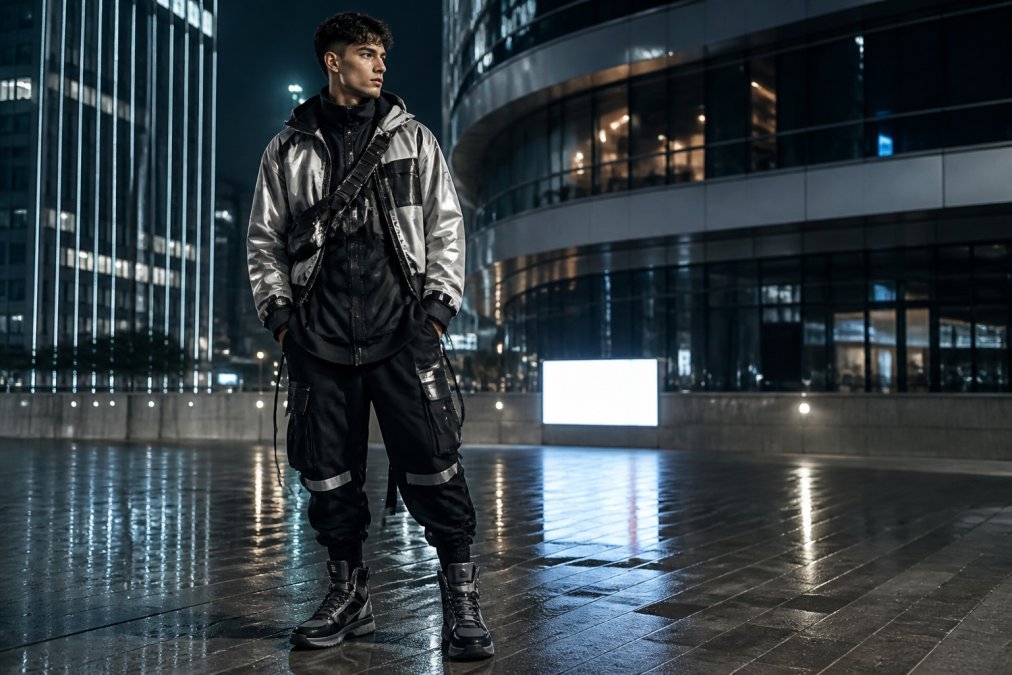
Styling futuristic clothing for urban dwellers isn't about costume, it's about integration. These pieces need to work within your actual life while projecting the aesthetic you're building.
Layering strategy. Start with a technical base layer. Add a mid-layer (graphic tee or lightweight shirt). Top with your weather-resistant jacket. This creates visual depth and functional versatility. As temperatures change throughout the day, you adjust without losing the overall aesthetic.
Color coordination. Futuristic streetwear typically uses dark bases (black, charcoal, navy) with strategic accent colors. Neon accents, metallic elements, or reflective details break up darker palettes. Planet iZM's Neon Cityscape Graphic Tee works perfectly as a mid-layer accent under a dark jacket.
Proportional balance. If your jacket is oversized, tapered pants prevent shapelessness. If pants are voluminous, a fitted mid-layer anchors the silhouette. Geometric cuts work best when you understand how they interact with your body and movement.
Footwear anchoring. Technical sneakers or tactical boots ground your outfit. They signal intentionality and tie the aesthetic together. Avoid conventional fashion sneakers, they undermine the futuristic vibe.
Accessory restraint. One or two functional accessories (crossbody bag, technical belt, watch) enhance without cluttering. More than that dilutes the aesthetic.
The real skill is making futuristic clothing feel natural in your routine. You're not performing; you're dressing functionally for urban life while expressing a particular vision of what that means.
Industrial Fashion Aesthetic and Functional Urban Utility
The industrial fashion aesthetic represents a crucial bridge between pure futurism and practical wearability. This approach prioritizes function so completely that aesthetics emerge naturally from that prioritization.
Industrial design philosophy asks: what's the minimum necessary to accomplish a task? Applied to fashion, this means every seam, pocket, and material choice serves a purpose. No decoration exists purely for decoration. This constraint actually produces distinctive aesthetics, because functional choices across multiple garments create coherent visual language.
Functional urban utility means your clothing solves real problems. Modular pockets let you organize differently depending on what you're carrying. Reflective elements improve visibility. Weather-resistant materials protect you. Tapered ankles prevent fabric catching on bike chains or stairs. Adjustable straps accommodate different body types and layering combinations.
This approach resonates with urban dwellers because it respects their time and attention. You're not fussing with impractical pieces, you're wearing something designed for actual city living. The futuristic aesthetic emerges because functional design for contemporary urban environments naturally looks forward-thinking.
The industrial aesthetic also embraces visible construction. Seams, zippers, and structural elements show rather than hide. This transparency signals authenticity and durability. You're wearing something built to last, not something designed to look delicate.
Sustainability and Budget-Friendly Approaches to Tech-Fashion
Approaching futuristic clothing for urban dwellers sustainably and affordably requires strategic choices rather than compromise.
Quality over quantity. Invest in fewer pieces that perform well and last longer. A durable technical jacket worn for years outperforms five cheaper jackets that degrade quickly. Planet iZM's offerings emphasize durability, pieces like the Waterproof Nylon Anorak Jacket use materials and construction designed for extended use.
DIY customization. Modular pieces invite personalization. Add reflective tape to existing jackets. Attach patches or pins to cargo pants. This approach extends the life of pieces while letting you evolve your aesthetic without purchasing new items constantly.
Capsule building. Start with five core pieces that work together. Everything you add must coordinate with existing items. This prevents accumulation of unused pieces and ensures cohesion.
Material sustainability. Look for pieces made with OEKO-Tex certified fabrics or other environmental standards. Some technical materials now use recycled synthetics, offering performance without virgin plastic consumption.
Second-hand market. Technical pieces hold value because they perform well. The second-hand market for futuristic and techwear pieces is growing, offering budget-friendly entry points. You're also extending the lifecycle of existing garments.
The intersection of sustainability and budget-consciousness isn't a compromise, it's actually aligned. Both approaches prioritize durability, thoughtful consumption, and making pieces work harder over longer periods.
Futuristic clothing for urban dwellers represents more than aesthetic preference, it's a practical response to how cities actually function. At Planet iZM, we've built our catalog around the belief that your wardrobe should reflect both where you are and where you're heading. Start with foundational pieces like weather-resistant jackets and technical layers, then build your personal aesthetic through thoughtful additions. Explore our collection of sci-fi-themed streetwear and discover how futuristic design solves real urban challenges while expressing your distinctive vision. STAY LOCKED IN WITH PLANET iZM.
Frequently Asked Questions
Q: What are the essential materials for futuristic streetwear?
A: Futuristic clothing relies on synthetic, weather-resistant fabrics like nylon, polyester blends, and technical textiles with water-resistant coatings. Look for pieces with high water-pressure resistance, breathable inner linings, and durable construction. Materials that reflect light or have iridescent finishes enhance the sci-fi aesthetic. Planet iZM's Waterproof Nylon Anorak Jacket features 100% nylon 330D with interior PU waterproof coating and 10,000 mm water pressure resistance, combining durability with futuristic style.
Q: How do I incorporate futuristic elements into everyday urban outfits?
A: Start with one statement piece like a graphic tee or technical jacket, then layer with neutral basics. Add geometric accessories, reflective details, or metallic accents to elevate standard streetwear. Mix oversized silhouettes with fitted pieces for visual interest. The Neon Cityscape Graphic Tee ($59.99) works as a foundation piece, pair it with cargo pants or layered jackets. Build gradually rather than committing to full techwear at once; this approach feels natural in daily urban environments.
Q: Is techwear the same as futuristic fashion?
A: Techwear is a subset of futuristic fashion focused specifically on functional, utility-driven streetwear with technical fabrics and modular storage. Futuristic fashion is broader, encompassing cyberpunk aesthetics, holographic trends, geometric designs, and sci-fi-inspired silhouettes that may prioritize visual impact over functionality. Both share dystopian and avant-garde elements, but techwear emphasizes practicality while futuristic fashion emphasizes aesthetic vision.
Q: Where can I buy futuristic clothing that actually holds up?
A: Quality matters when investing in futuristic pieces. Look for brands offering technical specifications like water-pressure ratings, fabric composition, and construction details. Planet iZM specializes in premium sci-fi-themed streetwear with verified material specs, the Color-Blocked Hard-Shell Outdoor Jackets ($71.99) feature water-repellent breathable fabric designed for daily commuting and outdoor wear. Check product descriptions for durability certifications like OEKO-Tex Standard 100, which indicates sustainable manufacturing and quality standards.
This article was written using GrandRanker