


Table of Contents
- Why Choose Techwear and Streetwear in 2026
- The Functional Streetwear Benefits You Actually Feel
- Industrial Fashion: Where Utility Meets the Runway
- How to Style Techwear: The 3-Layer Rule
- Techwear vs. Streetwear: What's the Real Difference?
- Quality and Price: What You're Paying For
- Where to Start: Entry Points for Every Budget
- The Verdict: Is This Aesthetic Right for You?
- Frequently Asked Questions
Last Updated: September 9, 2026
Why Choose Techwear and Streetwear in 2026
Techwear and streetwear have moved from niche subculture to mainstream wardrobe staple, and the shift is easy to understand once you wear a jacket that shrugs off a downpour while looking like it came from a sci-fi set. This guide from Planet iZM breaks down the practical reasons behind the aesthetic, from waterproof membranes to articulated cuts, so you can decide if the investment matches your lifestyle. We will cover the functional benefits, the styling system that makes it work, and where to start without overspending.
The appeal goes beyond looks. Techwear and streetwear represent a philosophy where clothing must earn its place by performing, not just decorating. Most people first notice the futuristic silhouette, but they stay for the utility: pockets that actually hold gear, fabrics that regulate temperature, and seams that survive urban wear. Below, we will show you exactly how to evaluate these pieces and build a wardrobe that works as hard as you do.
The Functional Streetwear Benefits You Actually Feel
The core promise of functional streetwear benefits is simple: your clothes should solve problems, not create them. Unlike fast fashion pieces that sacrifice durability for trends, technical apparel uses high-performance materials designed for specific conditions.
What does that mean in practice? A jacket with a waterproof coating and seam-sealed construction keeps you dry in a sudden storm. Moisture-wicking base layers pull sweat away from your skin during a commute. Cargo pockets and modular straps let you carry essentials without a bag, freeing your hands and reducing bulk.
The technical apparel guidelines from the Outdoor Industry Association emphasize that these garments are tested for breathability, water resistance, and durability under real conditions. When a brand lists a water pressure resistance of 10,000 mm, that is a measurable standard, not marketing fluff. This is the difference between a fashion statement and a tool you rely on daily.
Industrial Fashion: Where Utility Meets the Runway
Industrial fashion draws direct inspiration from military gear, outdoor expedition equipment, and urban infrastructure. The result is an aesthetic defined by utilitarian details: webbing straps, adjustable hoods, modular pockets, and hardware that looks like it belongs on climbing equipment.
This design language emerged from street culture and subcultures that valued anonymity and preparedness. The cyberpunk and normcore movements pushed it further, celebrating clothing that looks machine-made rather than hand-finished. Think matte black shells, articulated joints for movement, and minimal branding.
The genius of industrial fashion is that it flips traditional fashion logic. Instead of fragility signaling luxury, durability becomes the status marker. A jacket with reinforced elbows and a DWR coating signals that you are ready for urban exploration, whether you actually hike or just navigate public transit in the rain.
How to Style Techwear: The 3-Layer Rule
Styling techwear and streetwear effectively comes down to one system: the 3-layer rule. This approach, borrowed from outdoor performance wear, keeps you comfortable across changing conditions and creates the layered silhouette the aesthetic is known for.
The base layer sits against your skin and manages moisture. Choose a synthetic or merino top that wicks sweat away. The mid layer provides insulation, trapping warmth without bulk. A fleece or lightweight puffer works well. The shell layer is your outer defense against wind, rain, and cold, typically a hardshell jacket with a waterproof membrane.
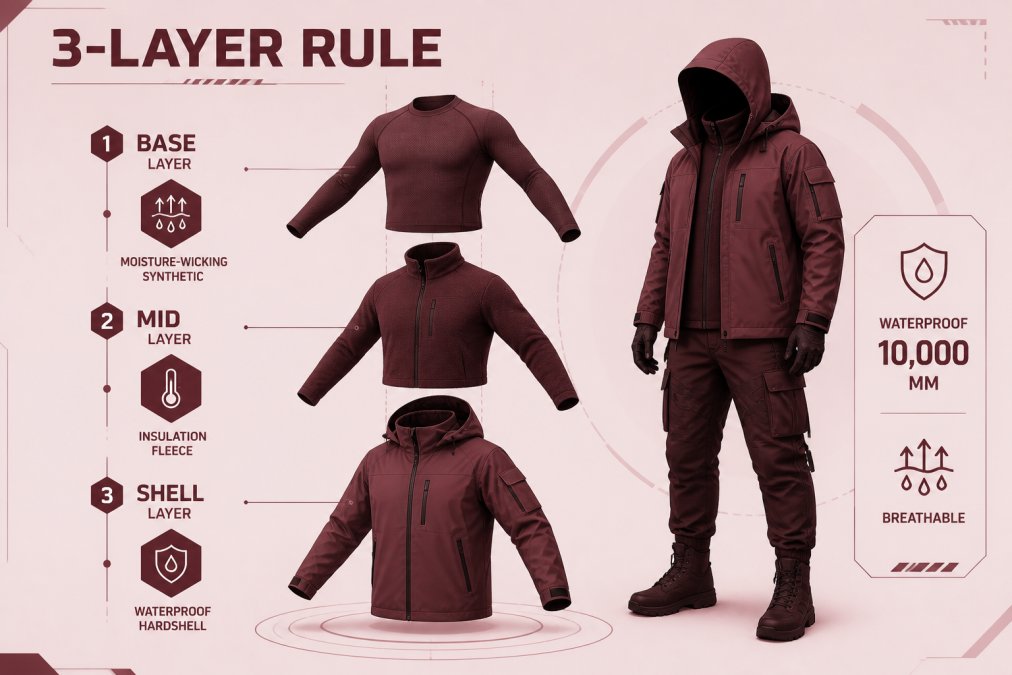
A common mistake is buying a heavy coat and calling it done. The 3-layer system lets you adapt: shed the mid layer indoors, add it back for the evening commute. This versatility is what makes the style practical, not just photogenic.
Techwear vs. Streetwear: What's the Real Difference?
People use the terms interchangeably, but techwear and streetwear have distinct roots. Streetwear grew from skate and hip-hop culture, prioritizing graphic designs, relaxed fits, and brand identity. Techwear emerged from outdoor and military performance gear, prioritizing function first, with aesthetics following the engineering.
The overlap happens in modern urban fashion. A technical shell jacket with a boxy fit and minimal logo appeals to both camps. The difference shows in details: streetwear asks "does this look good?" while techwear asks "does this perform, and does it look good?"
Most modern pieces, including many in the Planet iZM catalog, blend both. You get the streetwear silhouette and visual attitude, paired with technical fabrics and construction. If you want the aesthetic without sacrificing comfort, look for pieces that offer both style and measurable performance, like a Waterproof Nylon Anorak Jacket that combines a 10,000 mm waterproof rating with a street-ready cut.

Quality and Price: What You're Paying For
The price difference between a $30 fast-fashion jacket and a $90 technical shell comes down to materials and construction. Higher prices buy you nylon with a waterproof coating, sealed seams, and zippers that survive years of use. But the real cost of ownership isn't the price tag, it's how you maintain the technical fabrics to keep them performing.
The Hidden Cost: Fabric Care and Maintenance
Most guides focus on the aesthetics of techwear, but the true value lies in understanding how to care for the high-performance materials. A DWR (Durable Water Repellent) coating is not permanent (rei.com). It wears off with friction, dirt, and repeated washing. When water stops beading up on your shell, it's time to reapply. A common pattern is to use a spray-on or wash-in DWR treatment after every few washes or when you notice the fabric 'wetting out.'
STAY LOCKED IN WITH PLANET iZM →
Similarly, washing a GORE-TEX or similar membrane garment requires a specific approach. Use a technical detergent (like Nikwax Tech Wash or Grangers Performance Wash) that is free of fabric softeners, bleach, and optical brighteners. Fabric softeners clog the microscopic pores of the membrane, reducing breathability (gore-tex.com). Always wash on a gentle cycle with cold water, and either hang to dry or tumble dry on low heat to reactivate the DWR.
Evaluating Construction: The Three Checkpoints
When evaluating quality at the point of purchase, check three things. First, the fabric weight and coating: a 330D nylon with a PU coating is heavier and more durable than a thin polyester. Second, the seam construction: taped or sealed seams prevent water ingress at stitch points. Third, the hardware: matte metal zippers and rubber pulls last longer than cheap plastic.
Entry-Level vs. Investment Pieces
Understanding the care cycle also helps you decide where to spend. An entry-level piece at $60-$70 might use a PU-coated nylon that is water-resistant but less breathable. An investment piece at $150+ might use a 3-layer GORE-TEX Pro shell that is fully waterproof, highly breathable, and more durable. The trade-off is not just upfront cost but long-term maintenance. A cheaper PU coating will degrade faster and cannot be reactivated with a wash-in treatment. A quality membrane, if cared for properly, can last for years.
Planet iZM offers entry points like the Color-Blocked Hard-Shell Outdoor Jackets at $71.99, which include water-repellent fabric and adjustable hoods. The Independent Trading Co. EXP52BMR Lightweight Bomber Jacket at $69.99 adds a water-resistant interior coating with OEKO-Tex Standard 100 certification for sustainable manufacturing. These pieces are perfect for learning the care routine before you commit to a higher-end shell.


Where to Start: Entry Points for Every Budget
Building a techwear and streetwear wardrobe does not require a massive upfront investment. Start with one versatile shell jacket, which anchors the entire aesthetic. A good shell works over any outfit and provides immediate weather protection. But the real challenge for beginners is not just budget, it's fit. Techwear is often oversized or structured, and understanding how to style it for your frame is a significant missing piece in most guides.
Fit Guide: Styling for Different Body Types
Techwear's signature silhouette is often boxy and layered, but that doesn't mean it only works for one body type. The key is understanding proportions.
- For taller frames: You can carry the oversized look well. A longer shell jacket (mid-thigh length) with articulated knees in pants will create a strong, vertical line. Avoid cropped jackets that can make your torso look disproportionately short.
- For shorter frames: The goal is to avoid being swallowed by fabric. Opt for a cropped or waist-length shell jacket to keep your legs visible. Pair it with tapered cargo pants rather than wide-leg options. This creates a clean, elongated line. Look for pieces with adjustable hems or cuffs to fine-tune the fit.
- For broader shoulders or chest: A structured shell with a slightly relaxed fit will accommodate your frame without looking like a tent. Avoid overly boxy cuts that add bulk. Focus on articulated sleeves that allow full range of motion.
- For slimmer builds: You have the most flexibility. You can pull off the full oversized look, but be careful not to look lost in the fabric. Layering is your friend, a base layer, a mid-layer fleece, and a shell will add visual weight and create the structured, utilitarian look.
Budget Strategy: The 'One Good Piece' Rule
For a tighter budget, focus on accessories and single statement pieces. A technical backpack, cargo pants, or a patchwork jacket can shift your existing wardrobe toward the futuristic look without replacing everything. The Long Sleeve Patchwork Jacket at $59.99 offers a cotton blend with street-style color blocking, an accessible entry point.
The key is prioritizing layering pieces over one-off statement items. A shell jacket and a moisture-wicking base layer give you the foundation for countless outfits. Add pieces gradually as you understand what you actually wear and what fits your body type.
| Entry Point | Price | Best For | Key Feature |
|---|---|---|---|
| Lightweight Bomber | $69.99 | First technical piece | Water-resistant coating |
| Hard-Shell Jacket | $71.99 | Outdoor + city wear | Breathable, wind-resistant |
| Nylon Anorak | $89.99 | Full weather protection | 10,000 mm waterproof rating |
| Patchwork Jacket | $59.99 | Style-focused budget | Cotton blend, color-blocking |
The Verdict: Is This Aesthetic Right for You?
Techwear and streetwear suit anyone who values clothing that performs, who wants a distinctive look, and who is willing to pay for durability over disposability. If you commute in variable weather, carry gear daily, or simply want a wardrobe that reflects a forward-thinking identity, this aesthetic delivers.
The style does require some maintenance. Technical fabrics need proper care: wash with technical detergents, avoid fabric softeners, and reapply DWR coatings periodically to maintain water repellency. This care extends the life of your pieces significantly.
The culture around the aesthetic can feel exclusive, but the clothing itself is for everyone. You do not need to join a movement to wear a good shell jacket. You just need to appreciate the engineering and the look.
Choosing techwear and streetwear ultimately comes down to whether you want your clothes to do more than cover you. The best pieces combine futuristic design with measurable performance, creating a wardrobe that is both distinctive and practical. Planet iZM offers a curated selection of sci-fi-themed streetwear, from waterproof shells to lifestyle accessories, designed for those who want an edgy aesthetic without sacrificing quality. Explore the collection and find pieces that match your style and your standards. Get started with Planet iZM and build a wardrobe engineered for the future.
Frequently Asked Questions
What is the point of techwear?
Techwear serves two purposes: protection and utility. The point is to wear clothing that responds to real conditions, like rain, wind, or cold, while carrying your daily essentials in modular pockets. This is the core of functional streetwear benefits. Pieces like the Waterproof Nylon Anorak Jacket offer a 10,000 mm water pressure resistance rating, which means it handles heavy rain, so you are not just making a style statement, you are prepared for the environment.
How does techwear differ from traditional streetwear?
Traditional streetwear focuses on cultural expression, graphics, and silhouettes, often using basic cotton fabrics. Techwear prioritizes high-performance materials and construction. Think seam-sealed zippers, DWR coatings, and articulated joints. While streetwear makes a visual statement, techwear makes a functional one. The best modern outfits blend both, giving you the cultural edge of streetwear with the weather resistance and utility of technical apparel.
Can techwear and streetwear be styled together effectively?
Yes, and the combination is where the aesthetic gets interesting. Start with a technical shell, like the Color-Blocked Hard-Shell Outdoor Jacket, as your outer layer. Pair it with relaxed streetwear staples like wide-leg pants or heavyweight tees. The contrast between the technical outer layer and the more casual streetwear base creates the layered, utilitarian look. Focus on a neutral color palette to keep the outfit cohesive.
What is the 3-3-3 rule for clothing?
The 3-3-3 rule is a packing and wardrobe strategy, not a style law. It means bringing 3 tops, 3 bottoms, and 3 pairs of shoes for a trip. It applies to techwear because versatile, technical pieces are designed to work in multiple contexts. One waterproof shell can serve for urban exploration, a hike, or a night out. This versatility is a strong argument for why choose techwear and streetwear over faster-fashion items that serve one purpose.