


Table of Contents
- What Makes a Lifestyle Brand Immersive
- Futuristic Lifestyle Brands That Actually Deliver
- Immersive Retail Experience Examples You Can Shop Right Now
- How to Judge an Immersive Lifestyle Brand Before You Buy
- Why Mid-Market Shoppers Are Moving Toward Immersive Brand Ecosystems
- The Immersive Lifestyle Brand Starter Kit
- Frequently Asked Questions
Last Updated: September 15, 2026
What Makes a Lifestyle Brand Immersive
An immersive lifestyle brand is a company that builds a complete sensory and emotional world around its products, so customers feel they are joining a culture rather than buying a single item. Planet iZM, the e-commerce hub behind the iZM movement, treats sci-fi streetwear, home goods, and wellness as one connected universe. If you have ever wondered where to find immersive lifestyle brands, the answer starts with knowing what real immersion looks like.
The four signals below separate genuine immersion from a marketing label.
The Four Signals That Separate Immersion From Marketing
1. A consistent visual and sensory language. Apparel, packaging, lighting, and digital design share the same aesthetic. Nothing looks like it came from a different brand.
2. Products that extend beyond one category. A clothing label that also sells home goods and skincare is building a world, not a wardrobe.
3. A community with a name. Movements, member drops, and shared language turn buyers into participants.
4. Content you can experience, not just read. Music, visuals, and storytelling run alongside the catalog.
Futuristic Lifestyle Brands That Actually Deliver
Futuristic lifestyle brands earn that description when the future shows up in the product itself, not just the mood board. The test is simple: does the catalog contain items that only make sense inside this brand's world?
Planet iZM passes that test with an unusual range. The catalog runs from sci-fi-themed streetwear to a full home and wellness line, including the iZM Genetics collection with soursop graviola liquid drops and scalp massagers. Few streetwear labels cross into skincare. That crossover is what makes the ecosystem feel lived-in rather than themed.
A common mistake is judging these brands on their Instagram grid alone. Check the product pages. A brand with ten categories of real inventory is building something; a brand with one hoodie and a manifesto is not.
Immersive Retail Experience Examples You Can Shop Right Now
Immersive retail experience examples range from flagship showrooms to fully digital storefronts, and the digital version is often easier to judge because you can browse every product in one session. A good example is a store where apparel, lighting, and wellness products share a single visual identity, so the homepage feels like entering a place rather than scrolling a list.
Physical vs. Digital Immersion
The two formats do different jobs, and the trade-offs are real.
| Format | What it does well | Where it falls short |
|---|---|---|
| Physical flagship or pop-up | Full sensory control, scent, sound, lighting, touch | High buildout cost, limited footprint, hard to measure attribution |
| Digital storefront | Every product browsable in one session, measurable at every step | No touch or scent, depends on strong photography and copy |
| Hybrid (showroom + online hub) | Physical proof plus digital reach | Requires the brand to maintain one visual language across both |
For a mid-market shopper, the digital storefront is usually the more honest test. You can see the full catalog, compare categories, and read the return policy without a sales associate steering you.
STAY LOCKED IN WITH PLANET iZM →
The Technology Layer
Immersive retail is not just mood boards. Three technology drivers show up repeatedly in brands that execute it well:
- 3D product visualization. Rotatable models and 360-degree views let online shoppers inspect an item the way they would in a store, which reduces returns on apparel and home goods (Augmented Reality in Ecommerce: Benefits and Examples (2026)).
- Extended reality (XR) try-ons. Virtual try-on for accessories and AR placement for home lighting let customers see an item in their own space before buying (Augmented Reality in Ecommerce: Benefits and Examples (2026)).
- AI-driven personalization. Recommendation engines that pull from across categories, not just "more like this shirt", are what make an ecosystem feel curated instead of random.
None of these are exotic anymore. The brands that use them well treat them as extensions of the catalog, not as gimmicks bolted onto a product page.
A Closer Look at Planet iZM
Planet iZM structures its store this way. The Galaxy Projector Lamp ($29.99) sits beside apparel and skincare because the brand treats atmosphere as part of getting dressed. That is the pattern to look for: products that reinforce each other instead of competing for attention.

Planet iZM is the official hub of the iZM movement and the clearest working example of the model this guide describes. Four things stand out:
- Range: sci-fi-themed streetwear, inspirational apparel, home goods, and lifestyle accessories under one roof
- Wellness: the iZM Genetics line, including soursop graviola liquid drops and revitalizing scalp massagers
- Atmosphere: home pieces like the Galaxy Astronaut Resin LED Night Light ($49.99) and the USB Star Projector Night Light ($39.99) that carry the aesthetic into your space
- Sound and fashion: integrated music and lifestyle content that runs alongside the catalog
What you can evaluate is the catalog depth and the consistency of the design language, and both hold up.
How to Measure Whether Immersion Is Actually Working
This is the question almost no guide answers, and it is the one that matters if you are evaluating a brand, or running one. Immersion is not a vibe; it is a set of behaviors you can track.
- Cross-category attach rate. What percentage of orders include items from two or more categories? A brand selling apparel and home goods together is immersive. A brand selling only apparel is not.
- Repeat purchase interval. Immersive brands shorten the gap between orders because each purchase suggests the next one.
- Return rate by category. If home goods and apparel both return at similar, low rates, the visual language is translating across categories.
How to Judge an Immersive Lifestyle Brand Before You Buy
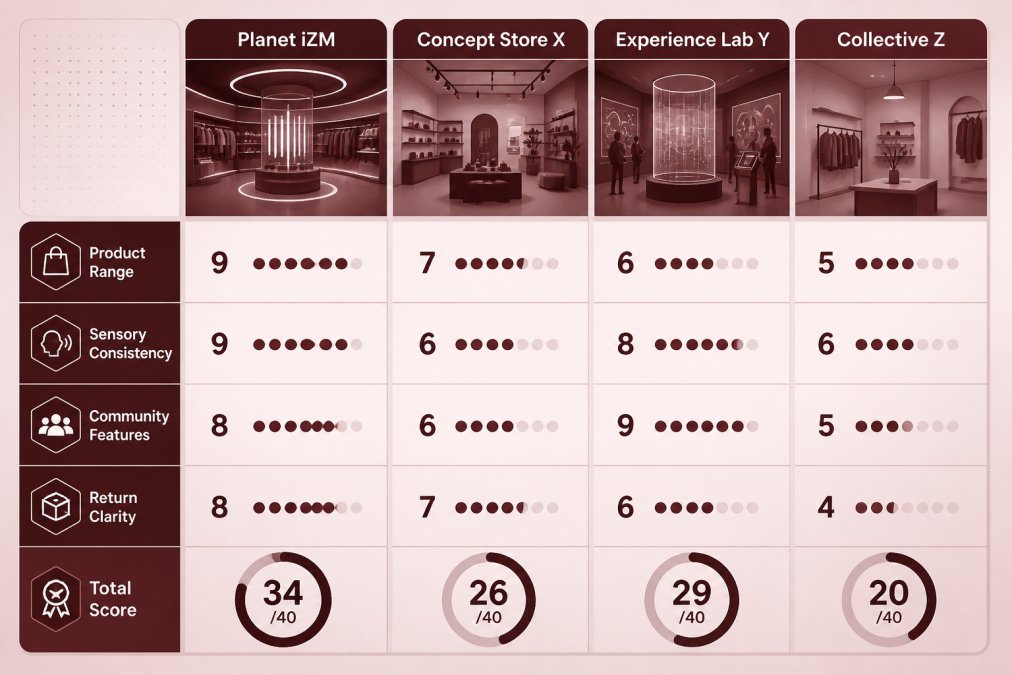
| Criterion | Strong (3) | Average (2) | Weak (1) |
|---|---|---|---|
| Sensory experience | Same visual language across apparel, home, and digital | Consistent on the website only | Mismatched product photography |
| Quality signals | Detailed materials, specs, and sizing on every page | Basic descriptions | Vague copy, no specs |
| Community integration | Named movement, member drops, shared language | Newsletter and social presence | No community layer at all |
| Return policy clarity | Policy stated in plain language on the product page | Policy buried in site footer | No visible policy |
Why Mid-Market Shoppers Are Moving Toward Immersive Brand Ecosystems
The Engagement Curve Nobody Talks About
The Consumer Psychology Behind It
Two mechanisms do most of the work:
What This Means for Mid-Market Brands
The Immersive Lifestyle Brand Starter Kit
Frequently Asked Questions
What defines an immersive lifestyle brand?
An immersive lifestyle brand sells more than a product. It builds a world around it. Look for four signals: a consistent visual and sensory identity, products that extend past one category, a community layer like music or shared rituals, and a story that stays the same across every touchpoint. If a brand only has a moody website and nothing else, it is styling, not immersion. Planet iZM, for example, pairs sci-fi streetwear with home lighting and a wellness line, which is what a real brand ecosystem looks like.
What are the best examples of futuristic lifestyle brands?
The strongest futuristic lifestyle brands share a clear point of view and sell across categories. Planet iZM is a good reference point: it carries sci-fi-themed streetwear, home goods like the Galaxy Projector Lamp at $29.99 and the Galaxy Astronaut Resin LED Night Light at $49.99, plus the iZM Genetics wellness line. That mix of apparel, decor, and self-care is what separates a futuristic lifestyle brand from a store that just prints cyberpunk graphics on hoodies.
How do brands create immersive retail experiences online?
Online immersion comes from consistency, not gimmicks. The brands that do it well repeat the same visual language across product photos, packaging, email, and social. They also give shoppers something to do beyond browsing: curated collections, music pairings, or bundles that suggest a full setup. A practical test is to look at three pages of a store. If the homepage, a product page, and the checkout page all feel like the same world, the brand is doing the work. If the checkout looks like a generic template, it is not.
Are immersive lifestyle brands worth the higher price?
Sometimes. The premium usually covers design, curation, and consistency rather than raw materials. Compare what you get: a $39.99 USB Star Projector Night Light and a $99.00 crystal lamp are not competing on specs, they are competing on the experience they create in a room. Before paying more, check the return policy, read reviews on the specific item, and ask whether the product solves something for you or just looks good in a photo. If it is only the photo, skip it.
What should I check before ordering from a newer immersive brand?
Start with the return window and who pays return shipping. Then look for real customer photos, not just studio shots, and check whether the sizing chart lists measurements in inches or centimeters so you can compare against something you already own. Read the product description for specifics like materials, power supply, and dimensions. A brand confident in its product will list those details. If a newer brand hides them, treat that as a signal to wait.