


Table of Contents
- Why Men's Skin Needs a Different Approach
- The Best Skincare Ingredients for Men, Ranked by Evidence
- How to Build a Men's Skincare Routine That Sticks
- The Importance of Daily Sunscreen for Men
- Budget-Conscious Science: What You Actually Need to Spend
- Skin Barrier Repair and Environmental Damage
- Frequently Asked Questions
Last Updated: September 11, 2026
Why Men's Skin Needs a Different Approach
Science backed skincare for men starts with one uncomfortable fact: the products most men use were never formulated with male skin biology in mind. This guide from Planet iZM breaks down what the research actually supports, what you can skip, and how to build a routine that survives real life. Male skin tends to run thicker in the dermis, produce more sebum, and accumulate more cumulative sun exposure over a lifetime, which changes both the problems you face and the ingredients that solve them.
Thicker Dermis, More Sebum, More Sun Damage
Three structural differences drive most of the gap. Male skin is generally thicker in the dermis, which delays visible fine lines but makes deep wrinkles more likely once they form (peer-reviewed research). Sebum production runs higher, feeding clogged pores and acne. And because men are less likely to wear daily sunscreen, cumulative photodamage tends to show up later and hit harder.
That combination explains why a product that works beautifully for one person can sit heavy or sting on another. The American Academy of Dermatology's guidance on skin care basics recommends a simple, consistent routine over a complicated one, and for most men that advice is exactly right.
What Science Backed Skincare Actually Means
Science backed skincare is a routine built around ingredients with published evidence for a specific claim, used at concentrations and frequencies that match how they were studied. It is not a marketing label, and it does not require a dozen steps.
What most guides miss is that "clinically tested" on a label often means the finished formula was tested for irritation, not that it delivers the anti-aging result you're buying it for. Read the active ingredients, not the front of the bottle.
The Best Skincare Ingredients for Men, Ranked by Evidence
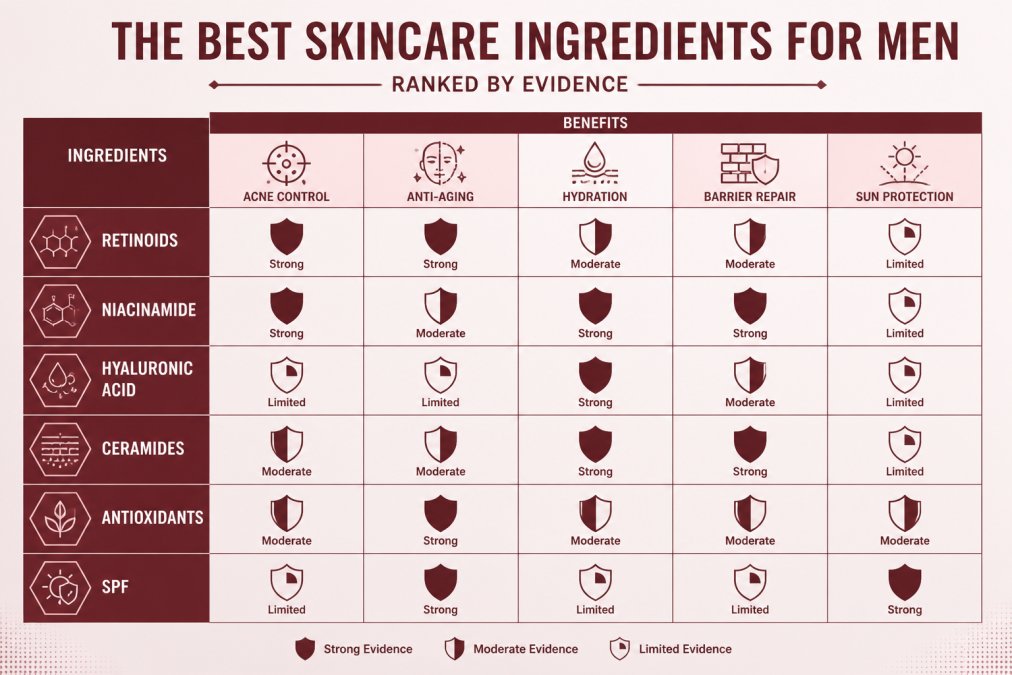
The best skincare ingredients for men are the ones with the strongest evidence base: retinoids for cell turnover and collagen synthesis, niacinamide for sebum control and barrier support, and sunscreen for preventing further photodamage. Everything else is supporting cast. Here is what each one actually does, and where the evidence is thinner than the marketing suggests.
Retinoids and Niacinamide: The Heavy Hitters
Retinoids remain the most studied over-the-counter ingredient for fine lines and uneven texture. They work by speeding cell turnover in the epidermis and supporting collagen synthesis in the dermis over months, not days. The mechanism is why results lag: you are waiting on new collagen, not on a surface coating. Start two nights a week and build up; irritation is the most common reason men quit before results appear. A pea-sized amount covers the whole face, more product does not mean faster results, only more peeling.
Niacinamide is the quieter workhorse. It helps regulate sebum production, supports the lipid barrier by boosting ceramide synthesis, and plays well with almost everything else in a routine. For acne-prone skin, it is often the easiest first active to tolerate. Most formulas land in the 4-5% range; higher concentrations are not automatically better and can trigger flushing in sensitive skin.
Acne and Clogged Pores: What Actually Causes Breakouts
A pimple starts when dead skin cells and excess sebum plug a hair follicle, and the bacterium Cutibacterium acnes colonizes the blocked pore. That sequence explains why the effective ingredients target different steps: salicylic acid dissolves the plug from inside the pore, niacinamide reduces the sebum feeding it, and benzoyl peroxide kills the bacteria. Retinoids prevent the plug from forming in the first place, which is why dermatologists often pair them with a benzoyl peroxide spot treatment rather than choosing one. Non-comedogenic labeling on moisturizers and sunscreens matters here, a heavy occlusive can undo a good active routine.
Hyaluronic Acid, Ceramides, and Antioxidants
Hyaluronic acid pulls water into the upper layers of the skin, which temporarily plumps fine lines and improves skin texture. It is a humectant, not a treatment, so it needs a moisturizer on top to hold that water in, in dry climates it can actually pull moisture from deeper skin if you skip the seal.
Ceramides replace lipids lost from the barrier, reducing trans-epidermal water loss. They are not an active in the anti-aging sense; they are the mortar that keeps the wall standing, which is why they pair well with retinoids that can thin the barrier during adjustment.
Antioxidants such as vitamin C neutralize free radicals from UV exposure and pollution, but they work best alongside sunscreen rather than instead of it. Vitamin C is also unstable, a formula that has turned brown has oxidized and lost most of its potency.
Ingredients to Skip
Fragrance and drying alcohols are the two most common irritants in men's grooming products, and neither adds a skincare benefit. Denatured alcohol in high concentrations strips the barrier; "fragrance" on a label can hide dozens of individual compounds, any of which can sensitize skin over time. If a product stings on contact and you are not using an active, the culprit is usually one of these two.
How to Build a Men's Skincare Routine That Sticks
A men's skincare routine that sticks has three core steps done daily and one or two add-ons done a few times a week. Complexity is the enemy here. Most routines fail in week three, not week one, usually because the person added four actives at once, got irritated, and quit.
Start by Identifying Your Skin Type
Before you buy anything, wash your face with a gentle cleanser, wait one hour without applying product, and press a blotting sheet to your forehead, nose, cheeks, and jaw. Shiny on all four zones points to oily skin; shiny only on the T-zone is combination; tight and flaky everywhere is dry; redness, stinging, or reactivity to new products signals sensitive skin. This matters because the same cleanser that rescues oily skin will wreck a dry barrier, and the same retinoid dose that clears one man's acne will peel another's face.
The Three-Step Core: Cleanser, Moisturizer, Sunscreen
- Cleanse morning and night with a pH-balanced, non-comedogenic cleanser. Oily and acne-prone skin tolerates a foaming formula with gentle actives; dry or sensitive skin does better with a cream or bar cleanser that leaves the barrier intact. [Planet iZM's Foaming Acne Cleanser](https://www.planetizm.com/products/foaming-acne-cleanser) uses organic Castile soap and natural acne-fighting ingredients without stripping the barrier.
- Moisturize while skin is still slightly damp to lock in hydration and support barrier repair. Gel-creams suit oily skin; ceramide creams suit dry or irritated skin.
- Apply sunscreen every morning, rain or shine, as the final step. This is non-negotiable, see the sunscreen section below.
Morning vs. Evening: What Changes
The morning routine is defensive: cleanse (or just rinse if your skin is dry), moisturize, sunscreen. Antioxidants like vitamin C fit here because they work alongside UV protection. The evening routine is reparative: cleanse off the day's sunscreen and grime, then apply your active, retinoid or a chemical exfoliant, followed by moisturizer. Retinoids degrade in sunlight, so they belong at night. Niacinamide is flexible and can go in either slot.
STAY LOCKED IN WITH PLANET iZM →

Exfoliation: Frequency and Method
Exfoliation removes dead corneocytes from the surface, which smooths texture and keeps pores from clogging, but the margin between "enough" and "too much" is narrow. Chemical exfoliants are generally gentler than scrubs: beta hydroxy acid (salicylic acid) is oil-soluble and works inside the pore, making it the better pick for acne-prone and oily skin, while alpha hydroxy acids (glycolic, lactic) resurface the surface and suit dull or textured skin. Start once or twice a week, never on the same night as a retinoid, and back off at the first sign of stinging or flaking.
Twice a week, swap your cleanser for an exfoliating bar. Planet iZM's Bamboo + Bentonite Mud Bar combines activated bamboo charcoal and bentonite clay to draw out impurities from oily and acne-prone skin without over-scrubbing.

The Importance of Daily Sunscreen for Men
Daily sunscreen is the single highest-return step in any men's routine, because UV exposure drives the majority of visible aging and skin cancer risk. Broad-spectrum SPF 30 or higher, applied every morning and reapplied during extended outdoor time, does more for long-term skin health than any serum.
The Skin Cancer Foundation's prevention guidance notes that men have higher rates of many skin cancers and are less likely to use sunscreen consistently. That gap is the whole argument. A moisturizer with SPF is fine for daily office use; for real sun exposure, use a dedicated broad-spectrum sunscreen and reapply every two hours.
Budget-Conscious Science: What You Actually Need to Spend
You do not need a ten-step routine to get results. Budget-conscious science means spending on the three or four products with real evidence and skipping the rest. A gentle cleanser, a moisturizer with ceramides, a broad-spectrum sunscreen, and one active (retinoid or niacinamide) covers the vast majority of what the evidence supports.
Planet iZM's iZM Genetics line keeps that math simple: the Clarifying Charcoal Creme Masque at $30 pairs charcoal with hyaluronic acid, jojoba, and olive fruit oils for a weekly detox that does not leave sensitive skin tight. The RAW African Black Soap at $15 is a gentle, all-skin-type cleanser for men who want one bar that does the job.
| Product | Price | Role in Routine | Frequency |
|---|---|---|---|
| Foaming Acne Cleanser | $12.50 | Daily cleanse, acne-prone skin | Twice daily |
| Bamboo + Bentonite Mud Bar | $9.00 | Exfoliating detox cleanse | 2x per week |
| White Tea + Ginger Shave Bar | $9.00 | Post-shave soothing, less irritation | Per shave |
| RAW African Black Soap | $15.00 | Gentle all-skin-type cleanse | Daily |
| Clarifying Charcoal Creme Masque | $30.00 | Weekly detox and hydration | 1x per week |
Skin Barrier Repair and Environmental Damage
Barrier repair is where most men's routines quietly fall apart. The lipid barrier, a mix of ceramides, cholesterol, and fatty acids in the epidermis, keeps water in and irritants out. Pollution, harsh cleansers, hot water, wind, and over-exfoliation all degrade it.
Signs your barrier needs a reset: stinging on products that used to feel fine, persistent redness, and skin that feels tight minutes after moisturizing. The fix is boring and effective. Pause exfoliation and retinoids for a week, cleanse with lukewarm water and a gentle formula, and lean on ceramide moisturizers. Most barriers recover within one to two weeks.
For shaving irritation specifically, swap traditional shaving cream for a cold-pressed bar. Planet iZM's White Tea + Ginger Shave Bar at $9 creates a dense lather that reduces nicks and bumps and soothes post-shave skin.

Building a routine that survives past week three is the hard part, not finding the right ingredients. Planet iZM's iZM Genetics skincare line gives you the core pieces, from the $12.50 Foaming Acne Cleanser to the $30 Clarifying Charcoal Creme Masque, without the guesswork or the ten-step markup. Start with a cleanser, a moisturizer, and daily sunscreen, add one active once your skin adjusts, and let the evidence do the rest. Get started with Planet iZM and build a science backed routine that actually holds up.
Frequently Asked Questions
What are the most effective science backed skincare ingredients for men?
The strongest evidence supports retinoids for cell turnover and collagen synthesis, niacinamide for sebum production and skin texture, hyaluronic acid for hydration, ceramides for lipid barrier repair, and broad-spectrum SPF for photodamage prevention. Antioxidants like vitamins C and E reduce free radicals. Look for fragrance-free, non-comedogenic formulations. A cleanser, moisturizer, and sunscreen with these active ingredients cover most men's needs without a ten-step routine.
How does men's skin differ from women's in terms of skincare needs?
Men typically have a thicker dermis, larger pores, and higher sebum production, which means more oiliness and acne-prone skin. Men also shave, which removes the top layer of epidermis and can cause irritation or post-shave bumps. These differences mean men often benefit from oil-free, non-comedogenic moisturizers, gentle exfoliation, and soothing post-shave products. SPF matters equally for both, since photodamage affects collagen synthesis regardless of gender.
What is the simplest science backed skincare routine for beginners?
A three-step routine covers the basics: a gentle pH-balanced cleanser morning and night, a lightweight moisturizer with hyaluronic acid or ceramides, and a broad-spectrum SPF 30 or higher every morning. Add a retinoid two to three nights per week once your skin adjusts. That is enough to address acne, hydration, and anti-aging without overwhelming your routine. Most dermatologist-tested products at accessible price points handle all three steps.
How long does it take to see results from a science backed skincare routine?
Hydration improvements show within days. Acne and skin texture changes typically take four to six weeks because cell turnover follows a roughly 28-day cycle. Retinoid results for fine lines and collagen synthesis take three to six months of consistent use. Sunscreen benefits accumulate over years by preventing photodamage. Consistency matters more than product count, so stick with a simple routine before adding new active ingredients.
What role does SPF play in a science backed skincare regimen?
SPF is the single most impactful anti-aging step. Broad-spectrum sunscreen blocks UVA and UVB rays that break down collagen, cause photodamage, and increase skin cancer risk. Daily use prevents the free radical damage that accelerates visible aging. Apply a nickel-sized amount to your face every morning, even on cloudy days, and reapply every two hours outdoors. A moisturizer with built-in SPF simplifies the routine for men who want minimal steps.
Do men really need a multi-step skincare routine?
No. A cleanser, moisturizer, and sunscreen handle the essentials. Adding a retinoid at night and a weekly exfoliation session covers anti-aging and skin texture goals. The multi-step routines marketed to consumers often duplicate active ingredients or add unnecessary products. Focus on formulations with proven ingredients like niacinamide, hyaluronic acid, and ceramides rather than chasing step counts. Three to four products used consistently outperform ten used sporadically.