


Table of Contents
- What You'll Need: Techwear Outfit Essentials
- Start with the Silhouette: Layering and Proportion
- Techwear Bag Styling Tips: Function as Fashion
- Hardware and Modularity: The Industrial Fashion Aesthetic
- Color Palette and Material Pairing for Techwear
- Common Mistakes to Avoid When Styling Accessories
- Maintaining Your Techwear Gear
- Conclusion: Build Your Look Piece by Piece
- Frequently Asked Questions
Last Updated: September 7, 2026
Techwear accessories are the functional finishing pieces that define the futuristic, utilitarian aesthetic: modular chest bags, tactical belts, technical headwear, and hardware-heavy backpacks that prioritize utility as much as visual impact. Styling these pieces correctly transforms a basic outfit into a cohesive, sci-fi-inspired silhouette. In this guide from Planet iZM, we break down the exact layering logic, hardware pairing, and proportion rules that separate a thoughtful techwear look from a costume. Below, we'll show you how to build a modular system where every strap, buckle, and pocket serves both the aesthetic and your daily carry needs.
The core principle is simple: techwear accessories should look like they belong to a system, not like they were added on. The most common mistake is treating accessories as decoration. In practice, this means every piece you add should echo the technical performance language of your outerwear and footwear. Before you buy another pouch or strap, learn the foundational rules of silhouette and proportion.
What You'll Need: Techwear Outfit Essentials
A functional techwear wardrobe starts with a few versatile anchors. You don't need a full tactical loadout; you need pieces that layer cleanly and share a visual language. The essentials include a technical shell jacket with water-repellent treatment, cargo pants with articulated knees, and a pair of chunky-soled footwear. From there, techwear accessories like a chest bag, a webbed belt, and a modular backpack complete the system.

Focus on versatility over volume. A single high-quality chest bag worn across the torso changes the entire geometry of an outfit, adding visual interest to an otherwise flat front profile. The GORPCORE and technical fashion trend analysis shows that the boundary between outdoor performance gear and streetwear has dissolved, meaning your accessories should be genuinely functional, not just decorative.
Start with the Silhouette: Layering and Proportion
Before adding any accessory, build the base silhouette. Techwear relies on a specific proportion: a cropped or fitted upper layer paired with a tapered or straight-leg cargo pant creates a clean, elongated line. Accessories should reinforce this geometry, not fight it.
- Chest bags sit high on the torso, visually breaking up the chest and drawing the eye upward.
- Utility belts define the waist, adding structure when your top layer is loose or oversized.
- Backpacks should sit snug against the back, not sag low, to maintain a simplified profile.
The layering order matters. Start with a moisture-wicking base layer, add an insulating mid-layer, and finish with a water-resistant shell. Your accessories attach to the outermost layer, so ensure your shell has compatible attachment points or that your bag straps sit comfortably over the fabric without bunching.
Techwear Bag Styling Tips: Function as Fashion
The chest bag is the defining accessory of the techwear aesthetic. Styling techwear accessories like the chest bag correctly means wearing it high on the chest, with the strap adjusted so the bag rests just below the collarbone. This placement keeps the profile compact and intentional. Lower slung bags read as sloppy and disrupt the silhouette.

A multi-function chest bag with concealed compartments is ideal for urban carry. The Multi-Function Chest Bag from Planet iZM demonstrates this principle, featuring a breathable PU exterior with nylon lining that keeps contents secure during extended wear. Its collapsible design allows it to pack flat when not in use, making it a genuinely versatile piece rather than a single-purpose accessory.
Crossbody bags and sling bags work similarly, but the strap orientation changes the look. A crossbody strap worn diagonally across the torso adds a dynamic line. For a more minimalist approach, a waist bag worn at the hip offers a lower-profile option that pairs well with longer jackets.
Hardware and Modularity: The Industrial Fashion Aesthetic
The industrial fashion aesthetic depends on visible hardware: buckles, zippers, straps, and webbing. These elements signal technical performance and durability. When styling techwear accessories, treat hardware as the connective tissue that ties your pieces together. A matte black buckle on your bag should complement the zipper pulls on your jacket, creating a cohesive metal finish throughout the outfit.
But the real depth of this aesthetic lies in modularity, the ability to reconfigure your carry based on the day's needs. Most guides stop at 'buy a bag with straps,' but the actual styling power comes from understanding the attachment systems that let you build a custom setup.
MOLLE (Modular Lightweight Load-carrying Equipment) is the most common system. It consists of horizontal rows of heavy-duty nylon webbing stitched onto bags, vests, or belts. You attach compatible pouches by weaving a strap through the webbing in an under-over pattern, then securing it with a snap or hook. This allows you to add a small utility pouch to a chest bag's front panel or a phone holster to a belt without buying a new piece of gear. When styling, keep the added pouches flat against the panel, a bulging pouch breaks the streamlined silhouette.
Fidlock magnetic buckles are a newer, cleaner alternative. These use rare-earth magnets that snap together with a satisfying click and release with a simple twist or slide. They're common on higher-end sling bags and belts. The styling advantage is a flush, low-profile connection that eliminates dangling strap ends. If your bag uses a Fidlock, pair it with a belt that uses the same system for a cohesive, modern look.
G-hooks and trigger hooks are the workhorses of DIY customization. A G-hook is a simple metal or plastic hook that clips onto a strap or D-ring. You can use these to attach a carabiner with keys, a small pouch, or even a water bottle holder to the daisy chain on your backpack. The key is restraint: one or two functional additions read as intentional, while five or six create visual chaos.
A common mistake is mixing too many hardware finishes. Stick to one metal tone across your accessories. If your bag has silver-toned buckles, your belt buckle and any visible zipper pulls should match. This restraint keeps the look intentional and prevents the outfit from feeling cluttered.
For a truly customized setup, look for bags with daisy chains, vertical loops of webbing on the front or sides. These allow you to clip accessories at different heights, adjusting the visual weight of your loadout. A small pouch clipped high on the chest draws the eye up; the same pouch clipped low shifts the focus to the waist. This level of control is what separates a styled outfit from a random collection of gear.
Color Palette and Material Pairing for Techwear
Color discipline is what separates a cohesive techwear outfit from a random mix of black clothing. The primary palette centers on black, grey, and olive, with white and navy as secondary tones. Accent colors like orange or teal should appear only in small doses, typically on zipper pulls, logo details, or interior linings.
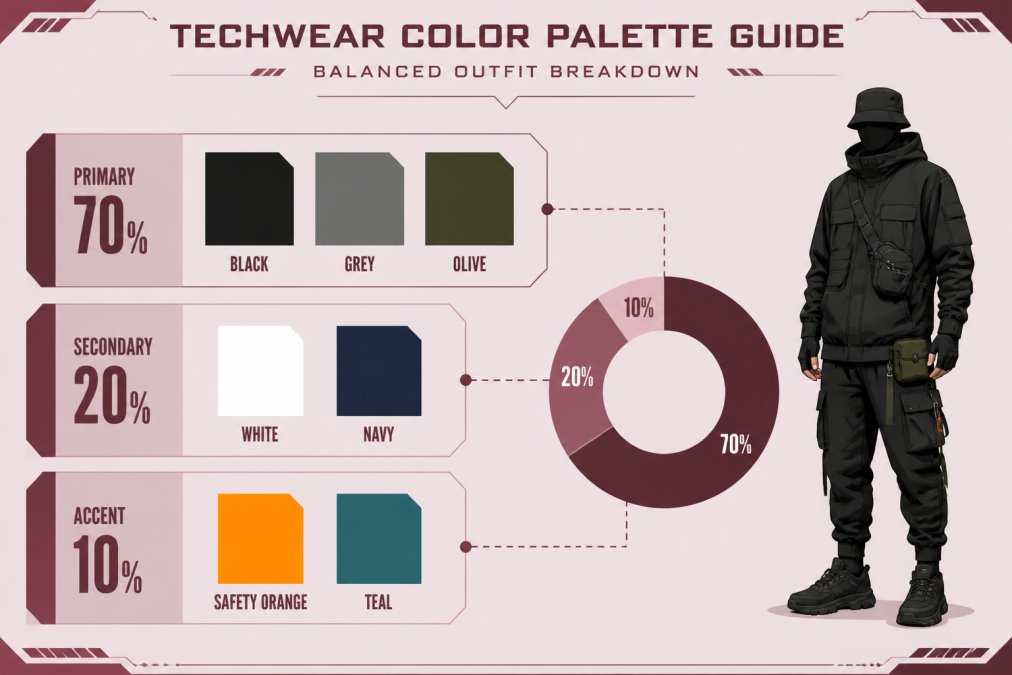
For materials, pair matte technical fabrics with small touches of contrast. A matte black shell jacket works with a bag featuring subtle reflective detailing or tonal stitching. The Color-Blocked Hard-Shell Outdoor Jacket uses water-repellent, breathable fabric with diagonal zipper pockets, delivering both the technical performance and the visual language techwear demands.

Gorpcore styling encourages blending these performance pieces with everyday casual wear. A technical chest bag pairs just as well with a plain white t-shirt and tapered joggers as it does with a full shell setup. The key is maintaining the monochromatic base and letting the accessory provide the utilitarian accent.
But color and material choices are not static, they must adapt to the season. Most styling guides ignore this, but the way you pair accessories in July heat is fundamentally different from a January downpour.
Hot and humid conditions (above 85°F): (weather.gov) The priority is breathability and reducing contact points. Swap a full chest bag for a slim, single-strap sling worn across the back, it keeps air flowing across your torso. Choose bags with mesh back panels or perforated padding. In terms of color, lighter greys and off-whites reflect sunlight better than black, so shift your palette up a shade. Avoid leather accessories entirely; they trap heat and stain with sweat. Nylon webbing belts with plastic buckles are cooler than heavy leather or metal options.
Rain and wet conditions: Water resistance becomes the dominant factor. Your accessories should match the water-repellent language of your shell jacket. Look for bags with taped seams and YKK AquaGuard zippers, these have a water-resistant coating that prevents moisture ingress. If your bag lacks these, use a dry bag liner inside. For hardware, choose coated buckles or stainless steel over bare aluminum, which corrodes. In terms of color, this is where olive and grey shine, they hide water spotting better than black. A reflective accent on your strap or bag becomes a functional safety feature in low-visibility rain.
Cold weather (below 40°F): The challenge is layering without bulk. A chest bag worn over a puffy jacket needs a longer strap to accommodate the extra volume, adjust it so the bag sits at your lower ribs, not your collarbone. For materials, this is the one season where leather accessories work well, as they pair naturally with wool and heavier outerwear. A leather chest bag adds a grounded, tactile contrast to a synthetic puffer. Keep hardware minimal, gloved hands struggle with small buckles, so favor magnetic or hook-style closures.
Transitional seasons (spring/fall): This is where you can experiment with the widest range of materials. A technical nylon bag pairs with a light shell in the morning and a denim jacket by afternoon. The rule is to match the weight of your accessory to the weight of your outermost layer. A heavy canvas backpack overwhelms a thin windbreaker; a slim nylon sling gets lost against a wool overcoat.
By adapting your accessory palette and material choices to the season, you keep the techwear aesthetic functional year-round, not just in a climate-controlled studio.
Common Mistakes to Avoid When Styling Accessories
The most frequent error is over-accessorizing. Wearing a chest bag, a utility belt, a backpack, and multiple pouches simultaneously creates visual noise. Choose one primary accessory and one secondary piece at most. A chest bag with a belt works; a chest bag, belt, and tactical vest does not.
Another mistake is ignoring proportion relative to body size. A massive backpack on a slim frame overwhelms the silhouette, while a tiny pouch on a broader frame looks lost. Match the scale of your accessories to your build. The Men's leather chest bag offers a large-capacity profile with multiple compartments, making it a strong choice for those who need more carry space without adding a second bag.
Finally, avoid mixing aesthetics carelessly. Cyberpunk elements like neon accents clash with a strictly utilitarian, muted palette. Decide whether you are building a grounded tactical look or a more stylized futuristic statement, then keep every accessory aligned with that choice.
Maintaining Your Techwear Gear
Technical fabrics and hardware require specific care to maintain their performance. Most water-repellent shells use a DWR (durable water repellent) coating that degrades over time with washing (rei.com). Clean your shell with a technical wash product and periodically reapply a DWR treatment to restore water beading. This is a maintenance step most styling guides miss.
For bags and accessories, wipe down hardware with a dry cloth to prevent corrosion. Leather pieces, like the men's leather chest bag made from top-layer cowhide, need occasional conditioning to keep the material supple and prevent cracking. Store bags with their zippers closed to maintain their shape and avoid stressing the zipper track.
Washing anything with webbing or straps requires care. Excess detergent residue can degrade the fabric's water resistance. Use minimal detergent and air dry all technical gear away from direct heat. High heat damages the coatings and can warp plastic buckles.
Conclusion: Build Your Look Piece by Piece
Styling techwear accessories is a discipline of restraint and intentionality. Start with a solid base silhouette, add one functional accessory that solves a real carry problem, and match your hardware and colors to create a cohesive system. Building a versatile wardrobe takes time, but each piece you add should expand your options, not complicate them.
At Planet iZM, we curate accessories that serve the movement and the individual. From the Multi-Function Chest Bag to the Retro travel large-capacity soft leather backpack, our pieces are designed to integrate with your existing wardrobe and elevate your daily aesthetic. Get started with Planet iZM and build a look that is unmistakably yours, piece by intentional piece.
Frequently Asked Questions
What are the essential techwear accessories for beginners?
Start with a technical chest bag or crossbody pack, a pair of tactical gloves, and a modular belt. These items immediately shift your silhouette toward the utilitarian look without requiring a full wardrobe overhaul. Focus on pieces with DWR-coated zippers, adjustable straps, and multiple compartments. A chest bag like the Multi-Function Chest Bag from Planet iZM is a solid entry point because it adds storage and visual interest to any neutral outfit.
Can techwear accessories be worn with casual streetwear?
Yes. The core of techwear styling is contrast and layering. Pair a technical bag with a simple hoodie, straight-leg jeans, and clean sneakers. The accessory adds the futuristic edge while the rest of the outfit stays grounded. Stick to a monochromatic base of black, grey, or olive so the hardware and straps become the focal point. This approach keeps the look wearable for daily commutes.
How do I choose the right techwear bag for my outfit?
Match the bag's scale to your frame and its function to your day. A compact sling works for minimal carry, while a larger backpack suits commutes or travel. For styling, opt for bags with black or tonal hardware to ensure compatibility across your wardrobe. The Men's Leather Chest Bag offers a premium look that transitions from urban settings to casual outdoor use, making it a versatile base layer for your accessory rotation.
Are techwear accessories considered unisex?
Most techwear accessories are designed to be unisex. The aesthetic relies on adjustable straps, modular attachment points, and utilitarian silhouettes that fit various body types. Bags, belts, and headwear rarely have gendered cuts. When selecting pieces, prioritize adjustability and proportional sizing over traditional gender categories. Brands like Planet iZM curate their collections with this fluid approach, allowing anyone to build a functional, futuristic wardrobe.
STAY LOCKED IN WITH PLANET iZM, and explore our full range of sci-fi-themed streetwear and functional accessories designed for those who demand more from their clothing.