


Table of Contents
- What Makes a Futuristic Skincare Routine Different
- Understanding Your Skin Type Before You Start
- The Core Steps of a Modern Skincare Routine
- Best Skincare Devices for Beginners
- Science-Backed Skincare for Millennials
- How to Build a Skincare Routine for Men
- Morning vs. Evening Routines and Layering Strategy
- Common Skincare Mistakes Beginners Make
- Frequently Asked Questions
Last Updated: August 31, 2026
What Makes a Futuristic Skincare Routine Different
A futuristic skincare routine for beginners uses science-backed ingredients, personalized data, and technology that works with your skin's biology rather than against it. The core difference lies in precision: traditional routines treat everyone's skin the same way, while futuristic approaches use active ingredients with proven efficacy, track how your skin responds over time, and adjust based on real results.
Modern skincare moves beyond the one-size-fits-all mentality. Instead of buying a generic moisturizer because it's popular, you select products based on your specific skin barrier needs, environmental stressors, and ingredients like hyaluronic acid that deliver measurable hydration.

Understanding Your Skin Type Before You Start
Before you buy anything, you need to know what you're actually working with. Skin type determines which cleansers won't strip your skin barrier, which serums will absorb properly, and whether you need lightweight hydration or richer moisturizers.
The most common mistake beginners make is misidentifying their skin type. Oily skin and dehydrated skin often feel the same. Sensitive skin can mask itself as dry skin.
Oily skin produces excess sebum throughout the day, especially in the T-zone. Dry skin feels tight after cleansing and may flake. Combination skin is oily in some zones while normal or dry elsewhere. Sensitive skin reacts easily to products and shows redness. Normal skin maintains balance without excessive oiliness or dryness.
The best way to determine your type is the patch test method. Apply a new product to a small area of skin and wait 24-48 hours before full application. This prevents reactive flare-ups and helps you identify ingredients that don't work for you.
The Core Steps of a Modern Skincare Routine
The foundation of any effective routine follows the same basic structure: cleanse, treat, moisturize, and protect. The difference in modern routines is the quality of each step and the active ingredients you're using.
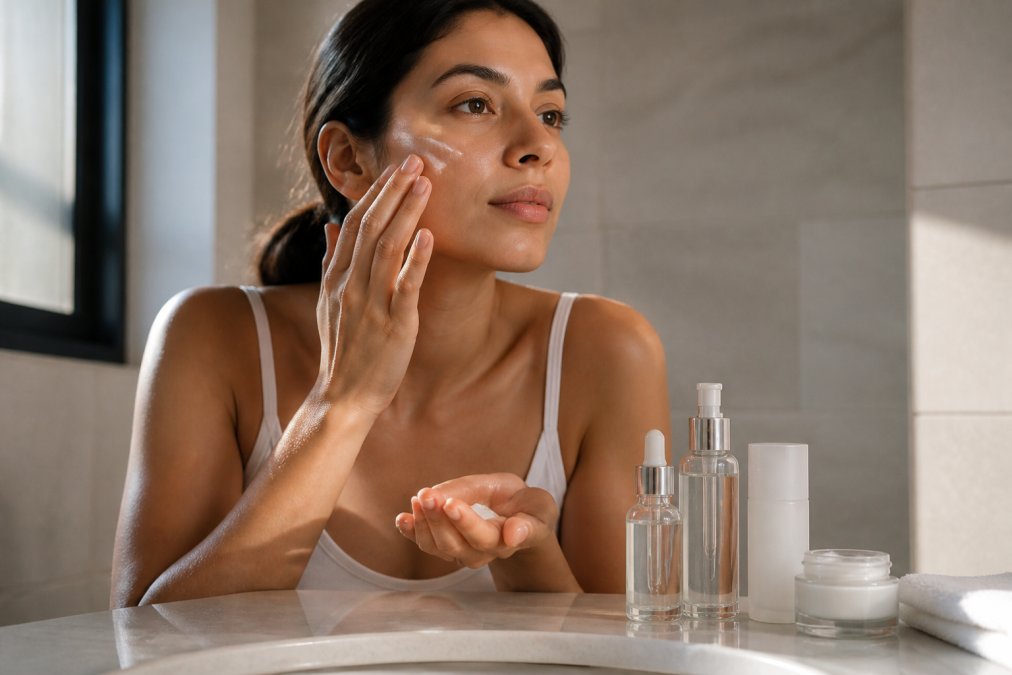
Step 1: Cleanse with Purpose
Cleansing removes dirt, excess oil, and environmental stressors that accumulate on your skin throughout the day. The wrong cleanser strips your skin barrier, leaving it vulnerable to irritation and dehydration.
Choose a cleanser that matches your skin type. For oily skin, a gel or foam cleanser works well. For dry or sensitive skin, a cream or milk cleanser is gentler. Double cleansing, using an oil-based cleanser first to dissolve makeup and oil-soluble impurities, then a water-based cleanser to remove water-soluble dirt, is particularly effective if you wear makeup or sunscreen daily.
Use lukewarm water, as hot water damages your skin barrier and increases inflammation (the American Academy of Dermatology). Spend 30-60 seconds massaging the cleanser gently into your skin, then rinse thoroughly.
Step 2: Apply Active Ingredients and Serums
Serums contain concentrated active ingredients designed to penetrate deeply and address specific skin concerns. Common actives include retinoids for collagen production and cellular turnover, hyaluronic acid for deep hydration, niacinamide for pore refinement and oil control, and antioxidants like vitamin C for protection against environmental stressors.
Apply serums from thinnest to thickest consistency. If you're using multiple actives, start with the one that addresses your primary concern. Wait 60-90 seconds between applications to allow each product to absorb fully. Start with one active ingredient if you're new to serums. Once your skin adapts after 4-6 weeks, you can add a second.
The American Academy of Dermatology recommends introducing active ingredients gradually to allow your skin to build tolerance.
Step 3: Moisturize and Support Your Skin Barrier
Your skin barrier is a protective layer that prevents water loss and keeps irritants out. Moisturizers restore hydration and reinforce this barrier with ingredients like ceramides, squalane, and peptides.
Choose a moisturizer based on your skin type. Oily skin needs lightweight, oil-free formulas. Dry skin benefits from richer creams. Apply moisturizer while your skin is still slightly damp from cleansing to lock in water and maximize hydration. For beginners, a simple moisturizer with hyaluronic acid and ceramides is sufficient. As you progress, you might explore options like the [Collagen Plumping Multi Balm(/products/collagen-plumping-multi-balm-retinol-stick-set) & Retinol Stick Set from Planet iZM | planetizm.com], which combines targeted retinol treatment with deep hydration for enhanced skin texture and elasticity.
Pat, don't rub. Rubbing causes irritation and can break delicate capillaries.
Step 4: Protect with Sunscreen
Sun damage causes premature aging, pigmentation issues, and increases skin cancer risk. Broad-spectrum SPF 30 minimum is the standard recommendation. Choose a sunscreen that works for your skin type and apply generously. Most people don't use enough, reducing effectiveness significantly.
Best Skincare Devices for Beginners
Modern skincare devices amplify what your products can do by improving ingredient penetration, stimulating collagen production, and enhancing cellular turnover.
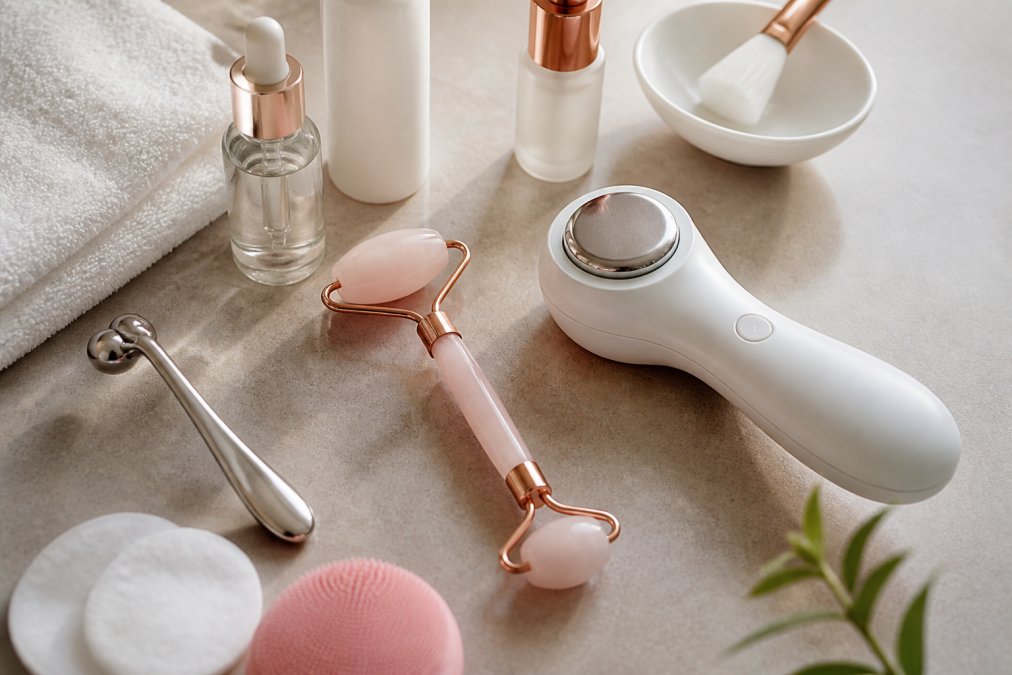
Facial rollers are the most accessible entry point. The [Rose Quartz Facial Roller(/products/rose-quartz-facial-roller) from Planet iZM | planetizm.com] provides gentle lymphatic drainage and improves product absorption. Use it in upward strokes after applying serums and moisturizers. The cooling effect also reduces puffiness and inflammation.
Microcurrent devices stimulate facial muscles and improve circulation by sending low-level electrical currents through the skin, promoting collagen production. LED light therapy devices target specific skin concerns: red light stimulates collagen production and reduces inflammation, blue light addresses acne-causing bacteria, and green light reduces redness and sensitivity.
Sonic cleansing brushes enhance your cleansing routine by using vibrations to remove impurities more effectively than manual cleansing. For beginners, start with a facial roller. It's affordable, requires no learning curve, and delivers immediate results.
Science-Backed Skincare for Millennials
Evidence-based skincare means prioritizing ingredients with clinical trial backing. Retinoids have decades of research proving they reduce fine lines and improve texture. Hyaluronic acid is proven to hold up to 1000 times its weight in water (peer-reviewed research). Niacinamide has clinical evidence showing it improves pore appearance and regulates oil production.
STAY LOCKED IN WITH PLANET iZM →
The difference between hype and science is simple: does the brand cite peer-reviewed research? Can you find clinical trial data? Are the concentrations of active ingredients disclosed? Real science-backed brands publish their research, disclose ingredient concentrations, and explain the mechanism of action.
Your skin is unique. Track how your skin responds to different products over 4-6 weeks. Keep notes on texture, hydration, breakouts, and sensitivity. After a month, you'll have real data showing what your skin actually needs.
How to Build a Skincare Routine for Men
Men's skin has higher sebum production and thicker skin than women's, which changes product selection but not the fundamental routine structure. The steps remain the same: cleanse, treat, moisturize, protect.
Cleansing is particularly important for men because of increased oil production. A gel or foam cleanser works well for most men. Avoid over-cleansing; twice daily is sufficient. Over-cleansing triggers even more sebum production as your skin tries to compensate.
Active ingredients matter just as much for men's skin. Retinoids address fine lines and improve texture. Niacinamide controls excess oil. Hyaluronic acid provides hydration without feeling heavy. Moisturizer doesn't have to be heavy; a lightweight, oil-free formula keeps skin hydrated without causing shine or breakouts.
Sunscreen is where men often drop off. Daily SPF protection prevents aging and skin cancer. Choose a matte-finish formula if shine is a concern. The key difference for men is consistency. Keep routines simple and repeatable to ensure adherence.
Morning vs. Evening Routines and Layering Strategy
Your morning and evening routines have different goals. Morning focuses on protection and preparation for the day. Evening focuses on repair and active treatment.
Morning routine:
- Cleanse with a gentle cleanser
- Apply a lightweight serum (vitamin C or hyaluronic acid)
- Moisturize with a lightweight formula
- Apply broad-spectrum SPF 30 minimum
- Optional: use a facial roller for lymphatic drainage and reduced puffiness
Evening routine:
- Double cleanse (oil-based then water-based)
- Apply active ingredients (retinoids, niacinamide, or other treatment serums)
- Apply a richer moisturizer
- Optional: use a facial device like a microcurrent device or LED light therapy
Layering strategy is critical. Apply products from thinnest to thickest consistency. Wait 60-90 seconds between applications to allow each product to absorb. A heavy moisturizer applied before a thin serum creates a barrier that prevents the serum from penetrating.
Common Skincare Mistakes Beginners Make
The most common mistake is buying too many products at once. Start with the basics: cleanser, serum, moisturizer, sunscreen. Add one new product every 4-6 weeks after your skin adapts.
Applying products to dry skin reduces efficacy. Always apply serums and moisturizers to damp skin. Water acts as a carrier, helping products penetrate more effectively.
Skipping the patch test causes problems. A 24-48 hour patch test on a small area prevents full-face irritation, especially important with active ingredients like retinoids.
Over-exfoliating damages your skin barrier. Once or twice weekly is sufficient for most people. If you're using chemical exfoliants, you don't need physical exfoliation too.
Inconsistency kills results. Skincare requires 4-6 weeks minimum to show measurable improvements. Commit to a routine for at least a month before deciding it's not working.
Using too many actives simultaneously overwhelms your skin. Introduce one active at a time, wait 4-6 weeks, then add another. A damaged skin barrier leads to sensitivity, irritation, and breakouts. Prioritize barrier-supporting ingredients like ceramides, squalane, and hyaluronic acid.
Building a futuristic skincare routine as a beginner means understanding that your skin responds to science, consistency, and the right ingredients. Start with the basics, measure your results, and adjust based on what your skin actually needs. At Planet iZM, we believe your skincare should be as forward-thinking as your aesthetic. Explore our iZM Genetics skincare collection, including our Collagen Plumping Multi Balm and Bakuchiol Multi-Balm Stick, designed with active ingredients that deliver real results. Your skin's future starts with the right routine today.

Frequently Asked Questions
Q: What is the best starting futuristic skincare routine for beginners?
A: Start with a simplified four-step routine: cleanse, apply a hyaluronic acid serum for hydration, moisturize, and use SPF sunscreen daily. This foundation covers essential skin barrier support and prevents cellular damage. Once consistent, add targeted active ingredients like retinoids or bakuchiol to address specific concerns. The key is consistency over complexity, most beginners benefit from mastering basic steps before introducing advanced tech-driven products.
Q: How do best skincare devices for beginners fit into my routine?
A: Beginner-friendly devices like facial rollers enhance your existing routine without overwhelming your skin. A rose quartz facial roller improves circulation and helps serums penetrate deeper when used after cleansing. Use it for 2-3 minutes in upward motions. Start with manual devices before investing in LED or microcurrent technology. These tools work best when your skin has adapted to core active ingredients, typically after 4-6 weeks of consistent basic routine use.
Q: What makes science-backed skincare for millennials different from traditional routines?
A: Science-backed routines prioritize evidence-based ingredients with clinical trial support, like retinoids for collagen production, hyaluronic acid for hydration, and niacinamide for skin texture. Modern approaches also emphasize skin microbiome health and environmental stressor protection. Millennials benefit from personalized routines informed by skin analysis and ingredient bio-availability rather than one-size-fits-all regimens. This data-driven approach delivers measurable results.
Q: Do men need a different approach to building a skincare routine?
A: The fundamentals are identical: cleanse, treat with active ingredients, moisturize, and protect with sunscreen. However, men often benefit from streamlined routines with multi-purpose products. Men's skin typically has larger pores and higher sebum production, so non-comedogenic, lightweight formulations work better. The routine remains the same; product texture and format adapt to preference and skin characteristics.
This article was written using GrandRanker